☀️ Returning to the Blog
Summer always gives me a little more room to think.
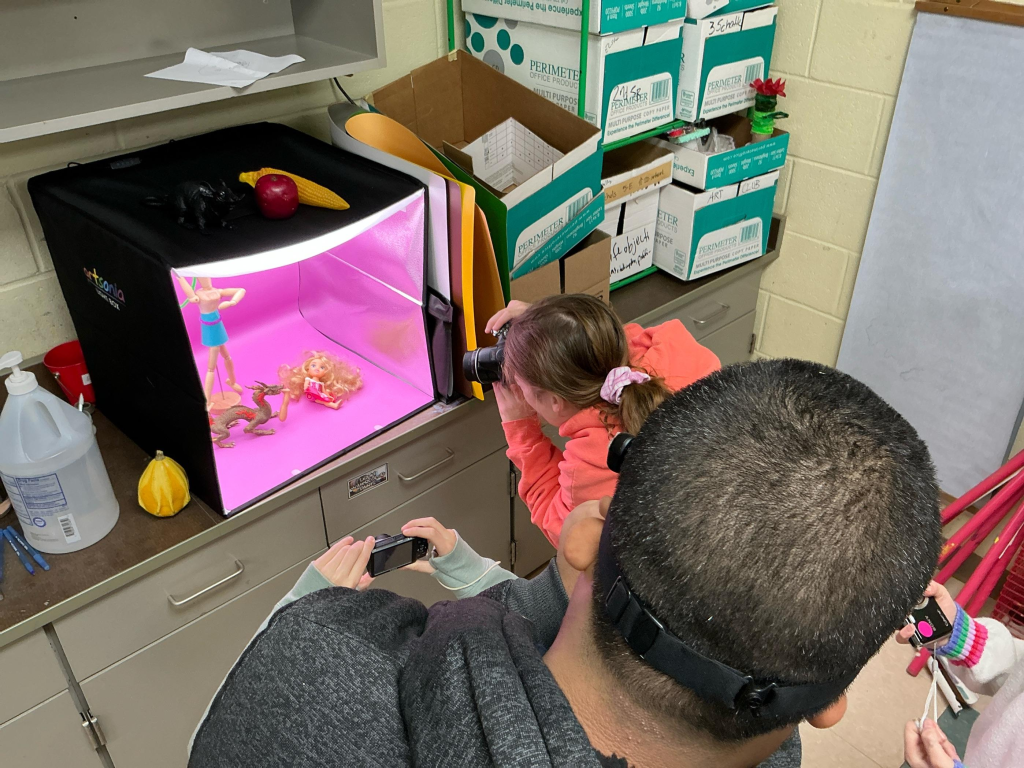
During the school year, the art room is full of movement: students choosing materials, iPads being passed out, paint being mixed, cardboard being transformed, clay tools being washed, photographs being taken, sculptures being balanced, and sketchbooks being opened for just a few minutes before the next studio decision begins. It is joyful, messy, purposeful, and sometimes wonderfully chaotic.
And in the middle of all of that, I am constantly making decisions.
What do these students need next?
What studio is ready to open?
What routine needs to be revisited?
What tool is causing excitement?
What material is causing confusion?
What did I notice today that I need to remember tomorrow?
So much of teaching happens in those small moments. The glance across the room when a student discovers something unexpected. The quick conference beside a table covered in paper scraps. The decision to pause a class for a two-minute reminder or let the artists keep working because the room is humming along. The quiet realization that a system I thought was working needs to be redesigned.
During the school year, I often live inside those moments. Summer gives me the space to step back and ask what they mean.
That is why I am returning to this blog.
✨ A Jumpstart, Not a Restart
When I first started this space, I wanted it to become a place to share ideas about Teaching for Artistic Behavior, Studio Habits of Mind, Media Arts, AI, classroom systems, and the everyday work of helping young artists grow. I still want that. Maybe even more now.
My first posts began that conversation. I wrote about why I was starting this blog and what I hoped to share here. I wrote about tools and strategies that help students feel confident and independent in a TAB studio. I wrote about AI in the art room and the need to approach new tools with creativity, responsibility, and human judgment.
This post feels like the next step.
Not a restart exactly, but a return.
A re-entry.
A jumpstart.
🌀 Teaching as a Living Practice
I am sharing more because I believe teaching is a practice worth documenting. Not because I have everything figured out, but because I am always figuring things out. My classroom is not a finished product. It is a living studio space that changes with the students, the materials, the schedule, the questions, the technology, and the unexpected discoveries that happen along the way.
That is one of the reasons I love Teaching for Artistic Behavior. In a TAB classroom, the child is the artist and the art room is the child’s studio. That sounds simple, but in practice it asks so much of us as teachers. It asks us to design spaces where students can make meaningful choices. It asks us to trust children as thinkers and makers. It asks us to observe closely, respond thoughtfully, and create structures that support independence without removing possibility.
It also asks us to keep learning.
🎨 Sharing the Thinking Behind the Work
Over the years, my art room has changed many times. Studios have shifted. Materials have moved. New tools have entered the room. Some systems have worked beautifully, and some have needed to be reimagined. I have added media arts, digital photography, Bloxels, Maker’s Empire, student portfolios, challenge badges, AI conversations, and new ways for students to reflect on their work. Each addition has brought new possibilities and new questions.
That is the part I want to share more honestly.
It is easy to share the polished final version: the finished artwork, the organized studio center, the successful lesson, the conference presentation, the resource that looks beautiful in Canva. Those things matter, and I will continue to share them. But I also want this blog to hold the thinking behind the work.
Why did I change that routine?
What problem was I trying to solve?
How did students respond?
What surprised me?
What did I learn from watching them work?
What am I still wondering?
Those questions are where my teaching lives.
🔍 Artist, Researcher, Teacher
I often think about my role as an artist, researcher, and teacher. Sometimes those roles feel separate, but most of the time they overlap. I am creating when I design the studio space. I am researching when I observe students and look for patterns in their choices. I am teaching when I introduce a new material, ask a question, help a student persist, or step back so they can make the next decision.
In that way, the art room itself becomes part of my creative practice.
The blog can become that too.
A space to notice.
A space to document.
A space to wonder.
A space to share what is working and what is still in progress.
🧭 What I Want to Explore Next
This summer, I want to build a more sustainable rhythm for posting. I want to write about choice-based art education in a way that is useful for other teachers, but also true to the lived experience of teaching elementary students. I want to share practical tools, but not separate them from the philosophy behind them. I want to talk about Studio Habits of Mind not as posters on a wall, but as behaviors I see when students stretch, explore, envision, reflect, observe, express, develop craft, and engage with their ideas over time.
I also want to keep thinking about Media Arts and AI in the elementary art room. These tools are not going away, and I believe art teachers have an important voice in these conversations. We understand images. We understand process. We understand creativity, authorship, visual culture, bias, remixing, experimentation, and choice. We can help students become thoughtful creators, not just consumers of digital tools.
🤝 Why Art Teachers Need Each Other
And, maybe most importantly, I want to share more because art teachers need each other.
So many of us are the only art teacher in our buildings. We build entire studio systems, manage hundreds of students, advocate for our programs, troubleshoot materials, teach across grade levels, and hold space for student expression in ways that are hard to explain unless you have lived it. Sharing our practice helps make that work visible.
It also helps us feel less alone.
When I read about another teacher’s classroom, I do not need their room to look exactly like mine. I need to see their thinking. I need to see what they tried, what they noticed, and what they are still working through. That kind of sharing helps me reflect on my own practice.
That is what I hope this blog can offer.
Not perfection.
Not a formula.
Not one right way to teach art.
Instead, I hope it becomes a place for conversation around student choice, creativity, studio practice, technology, reflection, and the ongoing work of becoming better for the young artists in our classrooms.
🌱 Beginning Again
So this summer, I am jumpstarting the blog.
I am returning to reflection.
I am making space to document the small decisions, big ideas, studio systems, questions, and discoveries that shape my teaching practice.
Just like my students, I am making choices, trying things out, revising, and seeing what happens next.
And that feels like a good place to begin again.


Leave a Reply